
The role of filtering capacitors in switch-mode power supplies is pivotal, and understanding how to select the right filtering capacitor, particularly the output filtering capacitor, is a topic of significant interest for engineering professionals. In the realm of power supply filtering circuits, one encounters a variety of capacitors – 100uF, 10uF, 100nF, 10nF – each with different capacitance values. The determination of these values is a critical aspect, and it's essential to recognize that they are not arbitrarily chosen or merely copied from existing schematic diagrams.
In 50Hz mains frequency circuits, conventional electrolytic capacitors are used, where the ripple voltage frequency is only around 100Hz, and the charge-discharge cycle occurs in milliseconds. To achieve a lower ripple coefficient, the required capacitance can reach several hundred thousand μF. For these standard low-frequency aluminum electrolytic capacitors, the primary focus is on increasing capacitance. The parameters for determining their quality include capacitance value, loss tangent of the dielectric, and leakage current. Conversely, in switch-mode power supplies, the output filtering electrolytic capacitors deal with sawtooth wave voltages at frequencies ranging from several tens of kHz to tens of MHz. Here, capacitance is not the main criterion. The quality of high-frequency aluminum electrolytic capacitors is gauged by their "impedance-frequency" characteristics. They must exhibit low equivalent impedance within the operating frequency range of the switch-mode power supply and effectively filter out high-frequency spike signals generated during semiconductor device operations.
Conventional low-frequency electrolytic capacitors start to exhibit inductive characteristics around 10kHz, which does not meet the requirements of switch-mode power supplies. In contrast, high-frequency aluminum electrolytic capacitors designed specifically for switch-mode power supplies feature four terminals. The positive foil has two terminals acting as the capacitor's positive end, and the negative foil also has two terminals serving as the negative end. The current flows into the capacitor from one positive terminal, passes through the interior, and then flows out to the load from the other positive terminal. Similarly, the returning current from the load enters one negative terminal of the capacitor and then flows back to the power source's negative terminal.
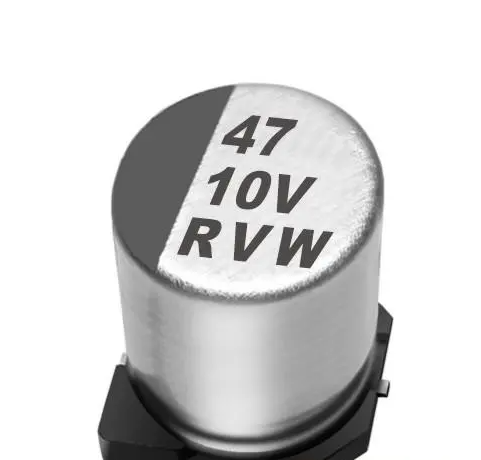
Four-terminal capacitors, with their excellent high-frequency characteristics, provide an effective means to minimize voltage ripple components and suppress switching spike noise. High-frequency aluminum electrolytic capacitors are also available in a multi-core format, where the aluminum foil is divided into shorter segments connected in parallel by multiple leads to reduce the impedance in the capacitive reactance. Furthermore, these capacitors use materials with low electrical resistivity for the lead terminals, enhancing their capacity to handle large currents.
This comprehensive understanding of power supply filtering capacitors, from their selection to their specific applications in different frequency environments, is crucial for engineering professionals. The intricate details of their construction, operation, and role in minimizing noise and ripple in power supplies underscore their significance in modern electronic design and the necessity of meticulous selection and application in various technological domains.